TV Outperforms Every Other Channel on Influence, According to New Data
This Research Report Just Confirmed What Performance Advertisers Should Already Know
There's a story the industry has been telling itself for the past few years: linear TV is dying, streaming is the future, and if you're a performance-minded DTC brand, your budget belongs to digital channels where you can track everything.
I've spent a lot of time pushing back on that narrative. Not because I have anything against streaming — we're one of the leaders in CTV advertising, and I'm bullish on where it's going. But because the data from hundreds of campaigns running through Tatari's platform has consistently told a different story: brands that abandon linear TV don't get more efficient. They get more expensive.
Now there's independent, third-party validation at scale. The TVB's 2026 Purchase Funnel Study — 4,000 consumer interviews conducted by GfK/NIQ across six product categories, including retail, automotive, QSR, banking, and more — just handed the industry a data-driven gut check. And for performance advertisers, the findings are worth reading carefully.
TV Still Owns the Funnel — Including the Part That Drives Purchases
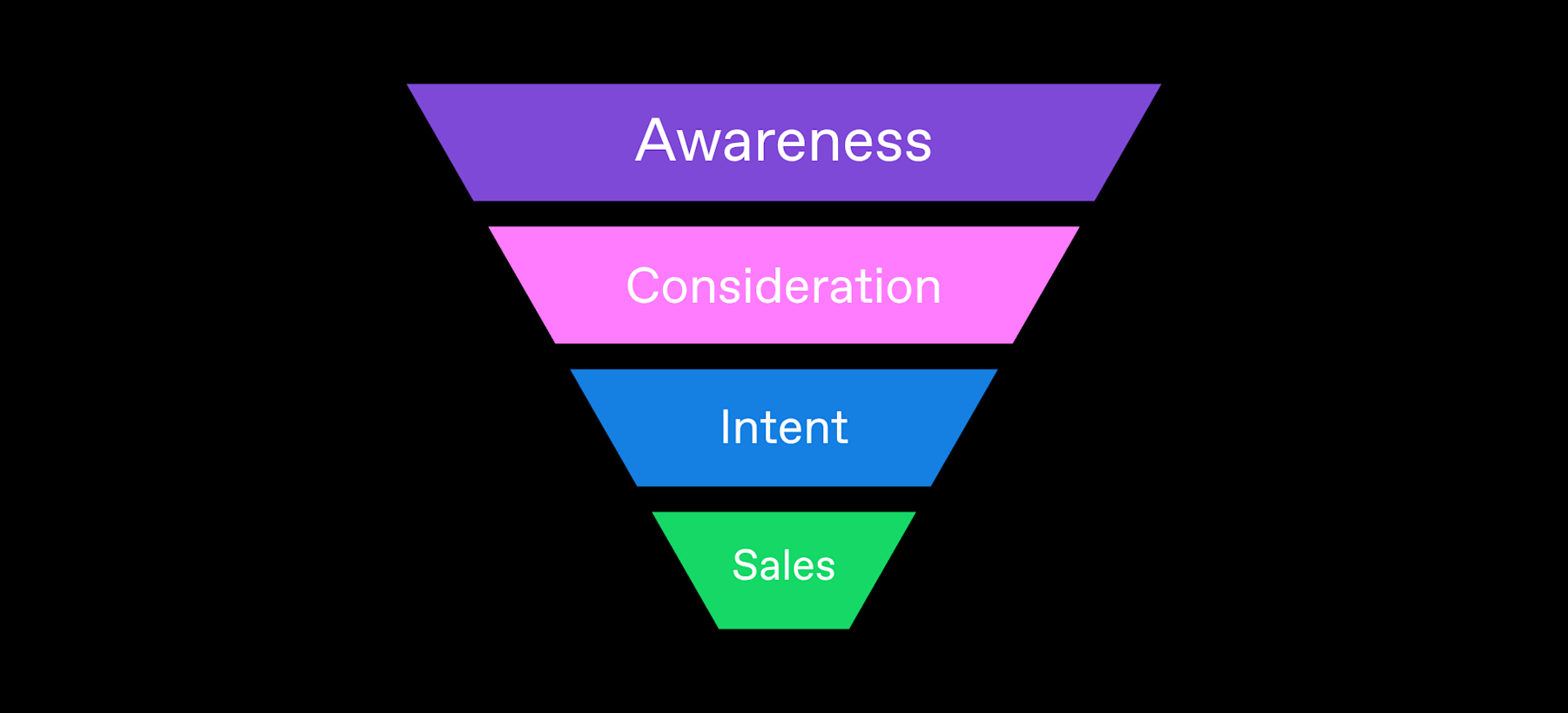
Here's the headline: television ranked as the most important influence at every stage of the purchase funnel. Awareness. Interest. Consideration. Purchase. Not social. Not YouTube. Not programmatic display. Television.
42% of consumers named TV as their most important influence for product/service awareness — more than 4x social media (9%) and streaming video like YouTube (6%)
That gap is significant. But here's the detail that performance advertisers often overlook: of the respondents who named TV as most important for awareness, 67% specifically chose broadcast TV over cable.
Broadcast. The format that gets written off the most often. The one that's supposedly out of reach for DTC brands. The one that's supposedly too expensive and too hard to measure.
We've been saying this to clients for years. Broadcast isn't a legacy medium — it's a reach vehicle with CPMs that often run three to four times cheaper than equivalent streaming inventory. The TVB study now says the same thing in consumer-reported behavior. That's a powerful combination.
Even Your Streaming Audience Relied on Linear TV First
This is the finding I find most useful for pushing back on the streaming-only argument. The study didn't just look at the general population — it also isolated respondents who actively use paid streaming with ads, free ad-supported streaming (FAST/AVOD), and platforms like YouTube. Then it asked: what media most influenced your awareness of the products you were shopping for?
Linear TV ranked #1 across all three streaming audiences. Among YouTube viewers, 42% named linear TV as their top awareness influence. Among FAST/AVOD users, 41%. Among paid streaming subscribers, 38%.
This matters because I hear a version of the same objection constantly: "Our audience is cord-cutters. They don't watch linear TV." The TVB data suggests those cord-cutters are still being influenced by linear ads — whether through appointment viewing they haven't fully abandoned, vMVPDs like YouTube TV and Hulu Live that serve linear feeds, or simply the cumulative effect of broad-reach brand building over time.
The audience you're trying to capture with your streaming buy built their category awareness somewhere else. Often, it was linear TV.
89% of Consumers Say Linear TV Shapes Their Online Search Behavior
Performance marketers love search because it's intent-driven and measurable. A consumer types in your brand name — or a category keyword — and you close them. But where does that intent come from in the first place?
The TVB study found that 89% of respondents said linear TV ads influence which terms they search for online. That's not a brand awareness stat. That's the direct link between a TV impression and the digital conversion event you're already measuring.
This is something we've been able to demonstrate through Tatari's measurement infrastructure. When clients run linear campaigns, we track the downstream impact on site visits, branded search lift, app installs, and ultimately conversions. The TV impression that looks invisible in your last-click attribution model is often doing the heavy lifting that makes your search and social campaigns more efficient.
The TVB finding on search influence is the consumer behavior data explaining why that pattern exists. When you pull linear from your mix, you don't just lose the TV impressions. You lose the downstream digital activity those impressions were generating.
Trust Is the Variable Performance Marketers Undervalue
Here's a finding that doesn't show up in your attribution dashboard but absolutely affects campaign performance: local broadcast TV news is the most trusted media platform among consumers, at 70%. Social media clocks in at 47%. Email newsletters at 46%.
For DTC brands running performance campaigns, the environment where your ad runs matters. An ad served in a trusted context lands differently than the same ad served in a low-trust environment. This isn't soft brand theory — it's a practical consideration for where your media dollars produce the best return.
Approximately 90% of TV impressions come from the top 10 publishers. The premium content — live sports, primetime broadcast, tentpole streaming events — isn't just the most-watched. It's the most trusted. And access to that inventory, particularly for live events, often requires going direct rather than purely programmatic.
We've seen this firsthand. During the Yankees ALDS Game 4 last year, nine Tatari brands bought same-day spots that reached 3.5 million viewers. That inventory was only accessible through linear buying. No programmatic pipe would have gotten you there.
What This Means for Your 2026 Media Planning
The TVB study didn't reveal anything new. It confirmed, at scale, what the performance data from campaigns running across Tatari's platform has been showing for years. Let me make the practical implications concrete:
Don't conflate viewership trends with ad influence. The study specifically notes that exposure to a media platform does not guarantee consumer importance — except for TV. Where someone watches doesn't always predict where they're most influenced. TV is the exception to that rule.
A streaming-only strategy is not a performance optimization. It's a reach restriction. The brands consistently hitting their CPA goals on TV are running convergent strategies — linear and streaming together — not betting everything on one pipe.
Measure the full effect of TV, not just the last click. If your measurement approach can't connect a TV impression to downstream search behavior, site visits, and eventual purchase, you're probably undervaluing TV's contribution to your funnel. The 89% search influence finding from TVB is a consumer-reported version of what we measure empirically every day.
Broadcast deserves a second look. If you've been dismissing broadcast TV as too mass-market for a performance brand, the data on CPM efficiency and awareness influence should prompt a reconsideration. The cost advantage is real. The reach advantage is real. And the broadcast-first preference (67% vs. cable) among consumers who name TV as their top awareness driver is real.
The TVB study gave the industry the consumer data to back that up. The question now is whether brands will update their media strategies accordingly.

Andy Schonfeld
I oversee client success at Tatari, am an avid runner, all-around sports fan, and a Dad of two.
Related

How to Budget and Plan for TV in 2026
TV continues to grow as a viable channel for advertisers, earning a larger role in how brands plan, scale, and measure their media investments. This guide breaks down the key TV trends shaping 2026, including a quarter-by-quarter look at the biggest events influencing budget decisions.
Read more
Why Streaming + Linear Work Better Together
When one advertiser shifted from a dual-channel TV strategy to streaming-only, performance quickly declined. See what happened when they turned linear back on.
Read more
The Best Way To Embrace Convergent TV? Break Down The Silos Between Linear And Streaming
Marketers who want to remain competitive need to reexamine the way they plan and measure performance across streaming and linear TV. Tatari's Head of Agency Partnerships breaks down how to dismantle traditional silos to create a unified, data-driven TV strategy that maximizes reach and ROI.
Read more