
Tatari vs. Vibe.co: Which Platform Drives Smarter TV Advertising?
Introduction: Why This Comparison Matters
CTV has become a critical channel for acquisition-focused marketers. But while many platforms promise simplified buying and performance insights, their underlying capabilities differ meaningfully.
Vibe.co emphasizes programmatic CTV activation through self-serve creative tools and bundled media packages.
Tatari, and Tatari’s Convergent TV Solutions, focuses on innovative approaches to transparency, measurement rigor, and full control across linear + streaming + online video, with both programmatic and direct buying options.
This comparison examines Tatari vs Vibe.co across the dimensions performance marketers ask about most:
Inventory access (Linear, Connected TV, and Online Video)
Transparency
Optimization control
Measurement depth
Pricing flexibility
Fit for team size and maturity
Key Takeaways
Tatari provides deeper transparency, measurement rigor, and cross-channel CTV and Linear control, while Vibe.co focuses on simplified, speed-first programmatic CTV setup.
Vibe.co is ideal for rapid testing; Tatari is built for advertisers who need attribution depth, data ownership, and scalable strategies across the TV advertising landscape to drive outcomes.
Tatari supports linear, streaming, and online video, with direct and programmatic buying options to maximize efficiency, enabling advertisers to reach the entire TV universe—not just CTV.
Tatari’s incrementality measurement, modeled ROAS, and log-level data create stronger alignment with performance teams and analysts.
The platforms serve different stages of maturity: Vibe.co suits smaller customers with early testing; Tatari suits the entire spectrum - from first-time TV advertisers to sustained brand growth and advanced optimization.
Why Performance Marketers Are Racing Toward Connected TV
CTV increasingly delivers digital-like accountability. According to multiple industry studies (IAB, ANA), marketers now expect TV investments to provide:
But platforms differ in how much control and visibility they give advertisers. This creates a natural split in the CTV ecosystem:
The Two Platform Paths: Simple Entry vs. Ownership and Scale
1. Entry Speed: Vibe.co CTV
Vibe.co’s value proposition centers on convenience and speed for smaller brands. It provides:
Automated ad creation
Media and basic creative tools
Quick onboarding
Simple workflows for small teams
This helps first-time CTV buyers launch quickly without managing creative vendors.
Trade-offs:
Limited visibility into underlying media allocation
Less control over optimization and pacing
CTV-only buying
Programmatic-only buying (which can lead to fraud and murky supply paths)
Reporting focused on engagement and delivery metrics
Best fit: SMBs, new-to-CTV advertisers, or teams prioritizing simplicity over control.
2. Ownership & Control: Tatari’s Transparent Performance Platform
Tatari appeals to marketers who need scale and evidence, not just ease. Through Tatari’s performance metrics and transparent buying model, advertisers get:
Both self-serve and managed service options
Both programmatic buying, and direct publisher integrations
Access to linear, streaming TV, and online video
Real-time budget and pacing adjustments
Incrementality measurement
Modeled ROAS and TV-to-web attribution
Log-level and cross-device reporting
Server-to-server data sharing via Vault (no pixel needed for measurement)
This gives teams the ability to optimize intelligently and measure TV’s true business impact. To understand why linear matters alongside streaming, see Why Linear TV Remains Effective
Platform Fit: Tatari vs Vibe.co in Action
Vibe.co: Self-Serve Creative + Media
Vibe.co is built for marketers who want:
Quick CTV activation
Basic creative production
Minimal setup friction
This can be helpful for smaller brands testing basic performance lift or running short-term campaigns. However, advertisers have more limited control over:
Audience strategy
Bidding
Pacing
Creative sequencing
Media mix
And reporting may provide less granularity than data teams expect.
Tatari: Full-Stack Performance Platform for Linear + CTV and online video
Tatari supports advertisers as they start and scale TV from test phase to a consistent acquisition engine. Key strengths:
Transparent CPMs and cost visibility
Flexible buying across linear + streaming
Programmatic + direct publisher access
Log-level exports for data science and BI teams
Outcome-based measurement (incrementality, modeled ROAS)
Real-time control for pacing, creative rotation, and budgeting
Enterprise-grade, privacy-enhanced measurement infrastructure via Vault
Learn more about how Tatari buys TV with full transparency: Tatari’s Media Buying Approach
And explore the outcomes brands have achieved: Tatari Case Studies
Feature Comparison — Tatari vs Vibe.co
Feature | Tatari | Vibe.co |
|---|---|---|
Channels Supported | Linear + Streaming, premium online video | CTV only |
Transparency | Log-level + cost visibility | High-level reporting |
Optimization Control | Real-time pacing, bidding, creative management | Platform-managed |
Attribution | Incrementality + modeled ROAS | Basic conversion output |
Pricing | CPM, CPA, flexible models | Bundled media + creative |
Data privacy Infrastructure | Vault clean room for attribution | Pixel-based |
Ideal For | Performance marketers and data teams, across the full marketing funnel | SMBs and quick-launches |
Optimization & Measurement: Tatari vs Vibe.co
Vibe.co’s Optimization Approach
Based on publicly available information, Vibe.co provides:
Platform-automated optimization
Creative-driven testing
Basic reporting around delivery and completion rates
Limited visibility into optimization mechanics
Good for advertisers wanting simplicity, not granular control.
Tatari’s Optimization Engine
Tatari offers advanced, transparent performance optimization:
Budget reallocation based on incremental lift
Audience-level insights across linear + CTV
AI-powered Planning Engine
Real-time pacing and creative rotation controls
Access to unique inventory on tentpole events like the Super Bowl and World Series
Cross-channel halo measurement (e.g., search lift, retail impact)
Log-level access enabling analysts to build custom models
Incrementality testing to isolate performance
Explore deeper measurement: Tatari’s Measurement Tools
Explore deeper media buying: Tatari’s TV Buying Tools
A Real-World Example
A mid-market ecommerce brand used a bundled CTV provider to test early adoption. The simplicity helped them launch, but reporting only included top-line delivery metrics.
When they later migrated to Tatari, the team gained:
Log-level event visibility
TV-to-web conversion attribution
Incremental lift analysis
Retail and Amazon impact measurement
This allowed their growth team to finally tie TV spend to business outcomes—and scale budgets with confidence.
Frequently Asked Questions (FAQs)
Q: What’s the primary difference between Tatari and Vibe.co?
A: Tatari provides transparency, measurement depth, and control across linear, streaming TV, and online video. Vibe.co focuses on fast programmatic-only CTV activation and basic creative tools.
Q: Which platform offers more data transparency?
A: Tatari. It offers log-level exports, transparent CPMs, and cross-channel attribution.
Q: Does Tatari require a large budget?
A: No. Tatari supports flexible minimums and offers both self-serve and managed-service models.
Q: Which platform is better for early-stage advertisers?
A: Vibe.co is strong for quick CTV tests. Tatari is better for advertisers who want measurable ROI and scalable performance across linear and streaming TV.
Q: How does attribution differ between the two?
A: Tatari uses incrementality, modeled ROAS, and multi-touch attribution across devices. Vibe.co generally focuses on platform-level or last-touch metrics (based on public documentation).
Disclosure: This comparison reflects Tatari’s perspective based on publicly available information, customer feedback, industry best practices, and our own platform capabilities. Marketers should evaluate multiple platforms to determine the best fit. Last updated January 5th, 2026.

John Riske
I'm a product marketer at Tatari. Outside of work, find me at a show (support the arts!), a yoga class, or cooking.
Related

Watch: Why Premium CTV Inventory isn’t in Programmatic
Watch our recap from Marketecture Live featuring leaders from Tatari, NBCUniversal, and WBD discussing why much of premium CTV inventory never enters programmatic and what advertisers and media buyers can do to drive real reach and impact.
Read more
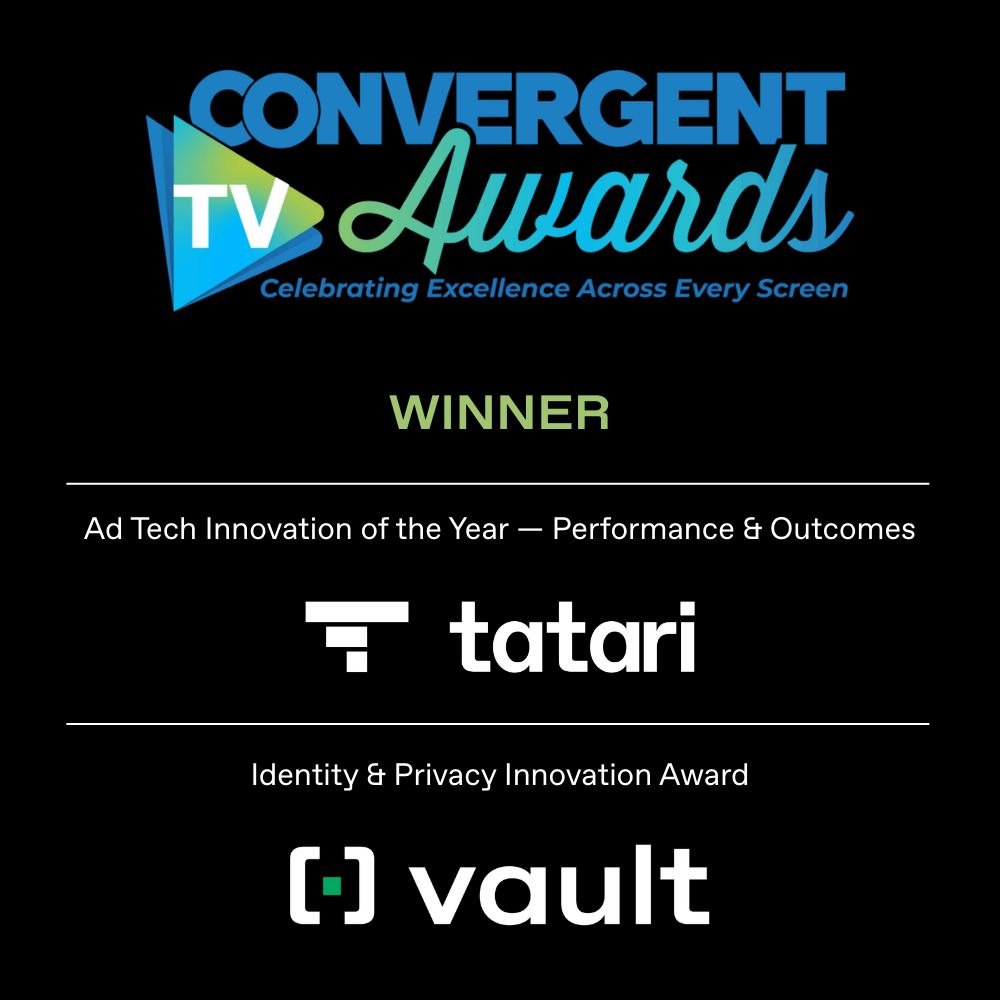
Tatari and Vault Win Two Convergent TV Awards for Innovation in Ad Tech and Privacy
Tatari and its sister company, Vault, have been recognized with two major honors at the 2026 Convergent TV Awards. Tatari was awarded with the Ad Tech Innovation of the Year honor, while Vault’s data clean room solution (DCR), garnered the Identity & Privacy Innovation Award.
Read more

What the OpenPath Fallout Reveals About the State of CTV Media Buying
Agencies like Dentsu and WPP exiting OpenPath expose the cracks in The Trade Desk's programmatic CTV platform and highlight the importance and need for direct sales automation, which represents the next phase of CTV buying and why we launched Upstream.
Read more